Magic: The Script That Captures the Human Touch in a Digital World
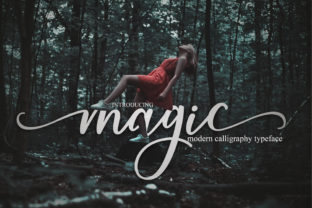
In a landscape saturated with perfectly rendered vector graphics and standardized fonts, a counter-movement is growing. Designers, brands, and creators are seeking authenticity, a return to the personal, the imperfect, the human. This is where modern calligraphy scripts like Magic are not merely finding a niche but are becoming essential tools. Magic is not just another font; it is a carefully crafted digital script that replicates the natural flow, weight variation, and organic elegance of handwritten calligraphy. It bridges the gap between the artisan’s pen and the designer’s screen, offering a tactile warmth in an increasingly virtual environment.
The Rise of Authenticity in Brand Communication
The broader trend driving the relevance of scripts like Magic is a fundamental shift in consumer and business psychology. Audiences, inundated with polished corporate messaging, are developing a keen sensitivity to genuineness. A brand voice that feels personal, direct, and crafted resonates more deeply than one that feels system-generated. This is evident across industries: from boutique coffee shops using handwritten chalkboard menus to global tech companies adopting more conversational tone in their marketing.
Magic fits seamlessly into this authenticity economy. Its natural handwritten style provides an immediate signal of care and attention. When used on a wedding invitation, it conveys intimacy and celebration. On a business card or a website header, it suggests a bespoke, client-focused approach, distinguishing a freelancer or a small firm from larger, more impersonal competitors. The script’s variability—the subtle imperfections in letter connections, the realistic bounce between characters—makes it feel alive, as if it was created for that specific purpose at that exact moment.
Operationalizing Handcrafted Elegance
The practical power of Magic lies in its operationalization. Historically, achieving this level of handcrafted elegance required hiring a calligrapher, scheduling time, and dealing with the physical limitations of ink and paper. Now, a designer or entrepreneur can integrate that aesthetic directly into their digital workflow. They can scale it for a magazine headline, repeat it across a series of social media posters, or imprint it onto a batch of mugs with consistent, reliable quality. This merges two previously separate worlds: the scalability and efficiency of digital technology with the emotional impact of traditional artistry.
Consider a modern lifestyle brand. Its blog might use a clean, geometric font for body text to ensure readability, but employ Magic for pull quotes and section headers. This creates a visual rhythm: the reliable foundation of standard typography punctuated by moments of human flair. Similarly, a marketer creating an email campaign can use Magic in the subject line or a key promotional graphic to grab attention in a crowded inbox, leveraging the subconscious association with personal correspondence.
Connecting to the Maker Movement and Creative Democratization
The relevance of Magic is further amplified by the parallel expansion of the maker movement and the democratization of creative tools. Platforms like Etsy, Shopify, and Canva have empowered millions of creators to build and market their own products. These creators often serve niches that value uniqueness and story. A hand-lettered quote on a poster, a custom-designed logo for a small business, or personalized wedding stationery—all are applications where Magic provides a competitive aesthetic edge without requiring the creator to master the physical skill of calligraphy.
This is a significant change in workflow and expectation. The expectation is now that professional-grade, specialty assets like a calligraphy font should be accessible, affordable, and easily integrated into common software like Adobe Creative Suite, Affinity products, or even web-based design platforms. Magic, as a well-crafted digital script, meets this need. It allows the freelance graphic designer, the entrepreneurial wedding planner, or the social media content creator to output work that feels premium and personalized, elevating their offering in a market where visual distinction is key.
The Technological Enabling of Organic Style
From a technology perspective, the creation of fonts like Magic represents an advancement in digital type design. It involves meticulously capturing not just letterforms, but the dynamics of writing: the pressure variance, the speed of strokes, the natural overlaps. This process results in a font file that is far more complex than a standard static typeface, containing alternates and contextual ligatures that mimic real handwriting. This technological capability is what makes the style viable for professional use—it ensures the “magic” doesn’t break down when used in a long headline or when two specific letters combine in an awkward way.
This technical robustness connects to larger developments in web typography and variable fonts. As online platforms become more capable of rendering sophisticated typography, the opportunity to use distinctive, emotion-carrying scripts like Magic on websites and in apps grows. This means a brand’s digital touchpoints—its website, its app interface, its online ads—can carry the same handwritten signature as its physical products, creating a cohesive and human-brand experience across all mediums.
Why Attention is Focused on This Aesthetic
People are paying attention to scripts like Magic because they fulfill a dual need: the need for differentiation and the need for connection. In a digital space where many visual elements become homogenized, a handwritten style is a clear differentiator. It breaks the pattern. More profoundly, in an era of remote work, digital communication, and sometimes impersonal interfaces, visual cues that hint at human presence and effort foster a sense of connection. A quote shared on Instagram rendered in Magic feels more like a personal note from the creator. A mission statement on a company website using the script reads more like a pledge from a leader, not a generic corporate value.
The application range itself speaks to its attentive audience. From high-touch, low-volume applications like wedding invites—where personalization is paramount—to high-volume, broad-reach applications like magazine layouts or poster series—where standing out is paramount—Magic provides a versatile solution. It’s this versatility that professionals appreciate. It’s not a one-trick font for a single project; it’s a brand asset that can be deployed across an entire visual identity system, from the business card to the product packaging to the promotional video graphics.
Practical Observations and Implementation
Implementing Magic effectively requires thoughtful design strategy. It is a display script, best used for headlines, logos, pull quotes, accents, and signatures. Overusing it can diminish its impact and potentially harm readability. The key is strategic placement. For example:
- Branding: Using Magic for a logo or a tagline, paired with a more neutral font for all body text and functional communication.
- Marketing Materials: Employing it for the main headline on a poster or the key value proposition on a flyer.
- Digital Content: Using it for chapter titles in an online magazine or for highlighted customer testimonials on a website.
- Product Design: Applying it as a decorative element on mugs, notebooks, or apparel where a handwritten quote or phrase adds value.
The observation here is that Magic works as an accent of humanity within a larger, more systematic design. It is the voice, not the entire language.
A Forward-Looking Asset for Modern Creators
As we look forward, the demand for digital tools that impart human character is likely to increase, not diminish. Automation and AI will handle more of the foundational, repetitive tasks in design and communication, freeing creators to focus on the elements that require emotional intelligence and brand personality. A script like Magic is precisely that kind of tool—it injects personality efficiently. It allows a creator to say, “This was made with care,” without having to manually draw every letter.
For professionals, entrepreneurs, and enthusiasts, adopting a resource like Magic is an investment in a visual language that speaks to contemporary values. It aligns with trends toward authenticity, personalization, and craft. It leverages technology to overcome the limitations of traditional methods. And it provides a tangible, aesthetic way to connect with audiences on a more human level, which remains the ultimate goal of any effective communication, whether for business, celebration, or inspiration. In essence, Magic is more than a font; it’s a strategic design decision for those who understand that in the future, the most impactful digital experiences will feel unmistakably human.